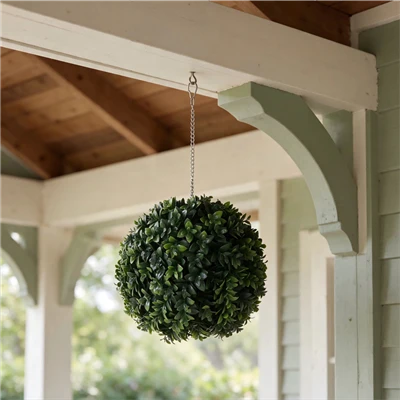
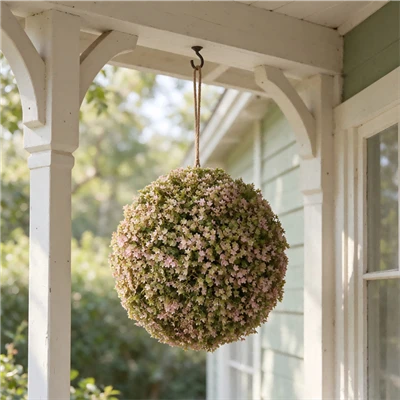
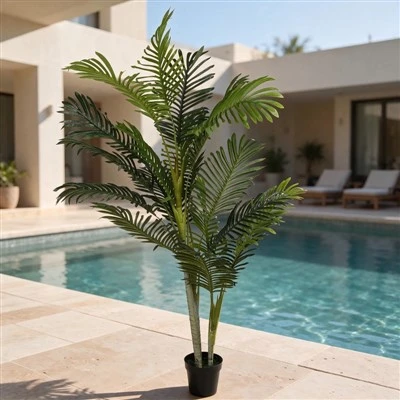
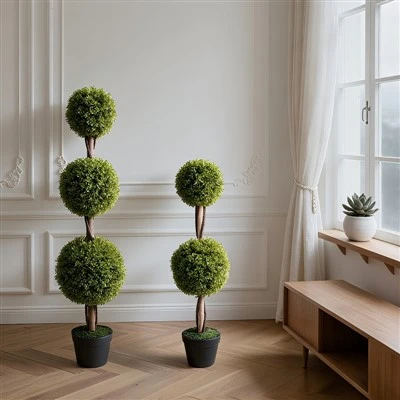
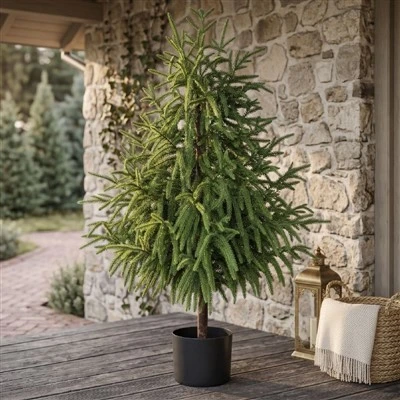
Artificial topiary trees are used in commercial landscaping, hotel entrances, shopping centers, restaurants, office buildings, gardens, and public spaces. Their sculpted shapes provide a consistent greenery arrangement without the watering, pruning, and shaping required by natural plants.
For importers, wholesalers, landscape contractors, and commercial decoration companies, selecting an artificial topiary tree manufacturer involves more than comparing product appearance. Tree dimensions, foliage materials, internal support structures, customization options, bulk pricing, and export packaging all influence purchasing decisions.
This article introduces five artificial topiary tree manufacturers and examines the product specifications and purchasing considerations that businesses should evaluate before placing wholesale orders.
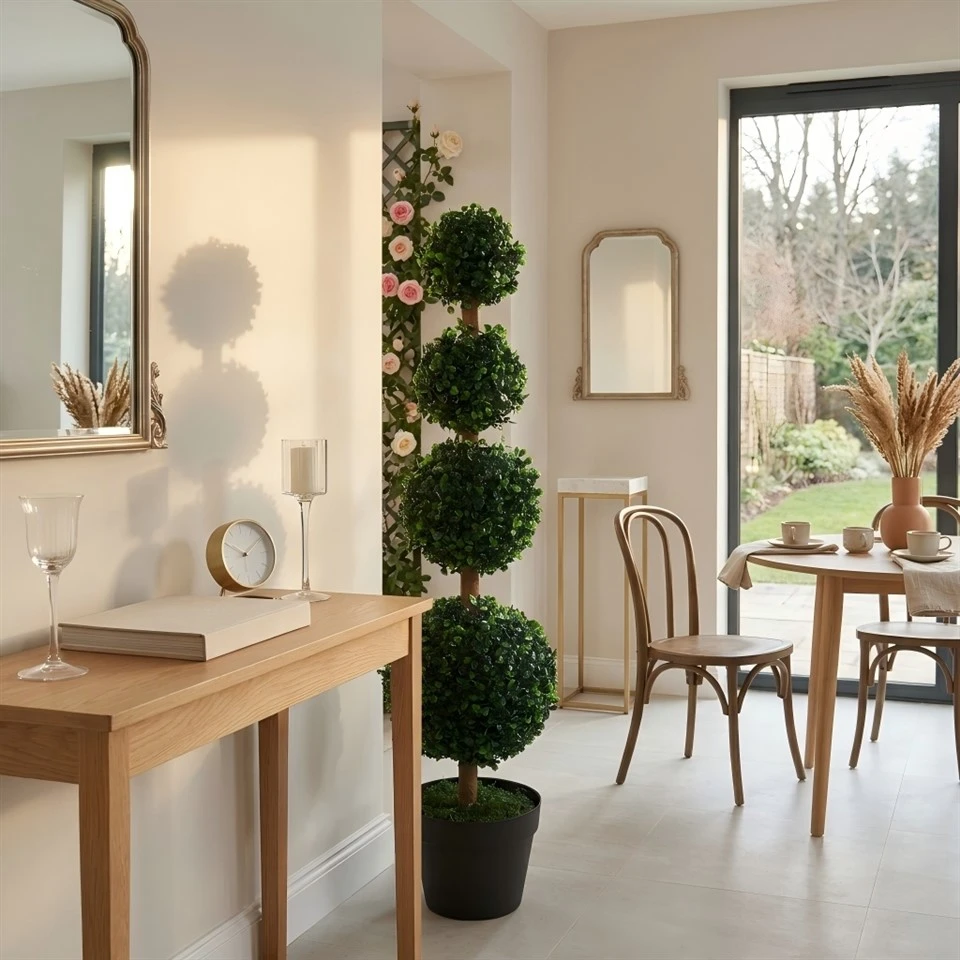
Top 5 Artificial Topiary Tree Manufacturers in 2026
| Company Name | Main Product Focus |
|---|---|
| Zhejiang Ruopei Arts & Crafts Co., Ltd. | Artificial topiary trees, topiary balls, artificial trees, hedges |
| Dongyi Artificial Plants Co., Limited | Artificial topiary trees, cypress trees, olive trees, greenery |
| Guangdong Senbo Arts & Crafts Co., Ltd. | Artificial trees, bonsai, palm trees, decorative greenery |
| Guangdong Songtao Co., Ltd. | Artificial trees, large decorative trees, artificial landscape products |
| Cheng Yi Creation Company Ltd. | Artificial topiary balls, boxwood plants, decorative artificial plants |
Zhejiang Ruopei Arts & Crafts Co., Ltd.
Zhejiang Ruopei Arts & Crafts Co., Ltd. is an artificial greenery manufacturer established in 2013 in Lanxi, Zhejiang, China. The company integrates product research and development, industrial design, injection molding, production, warehousing, and sales. Its manufacturing facility covers approximately 50,000 square meters and is equipped with more than 100 injection molding machines.
Ruopei's product development capabilities cover artificial topiary trees, topiary balls, artificial hedges, artificial grass, artificial trees, bonsai, wreaths, and hanging plants. Rather than relying exclusively on standard product models, the company can develop new artificial greenery products through mold development, foliage design, material selection, and structural adjustments.
Manufacturing and Product Development Capabilities
Mold Development and Injection Molding: The production facility uses injection molding equipment to manufacture artificial foliage components. In-house mold development supports the creation of different leaf shapes, sizes, and product structures.
Product Design and Development: The R&D process covers new product concepts, appearance design, component selection, and sample development. This allows the company to develop artificial greenery products for different market requirements.
Large-Scale Production: With more than 100 injection molding machines and a broad product catalog, Ruopei can coordinate component production, manual assembly, inspection, and packaging for bulk orders.
Sample Development: The company provides sample-making services so customers can review product appearance, dimensions, foliage arrangement, and material configuration before mass production.
OEM, ODM and Wholesale Services
Ruopei provides OEM and ODM services for importers, wholesalers, and commercial landscaping suppliers. Customization can cover topiary shapes, tree dimensions, foliage colors, product structures, and packaging requirements.
For customers developing private-label collections, product specifications can be established through reference samples, drawings, or design requirements. The company also coordinates production and quality inspection to maintain consistency between approved samples and bulk orders.
Its export business covers more than 50 countries and regions, with an annual output exceeding 1,000 containers according to its company profile. This international supply experience is relevant to distributors managing repeat purchases and multiple artificial greenery categories.


Dongyi Artificial Plants Co., Limited
Dongyi Artificial Plants Co., Limited, operating under the DYArtificial brand, is an artificial plant manufacturer based in Dongguan, Guangdong, China. Established in 1998, the company specializes in artificial trees, topiary products, greenery panels, potted plants, artificial flowers, and fiberglass planters.
One of its distinctive capabilities is the integration of artificial plant manufacturing with material testing, customized production, and export packaging. Its manufacturing facilities include automatic and semi-automatic injection molding machines, plant-forming equipment, flocking machines, embossing machines, and dedicated mold-making equipment.
Dongguan Senbo Arts & Crafts Co., Ltd.
Dongguan Senbo Arts & Crafts Co., Ltd. is a manufacturer specializing in artificial plant bonsai, decorative trees, and large-scale artificial landscape products. Established in 2014, the company operates a 6,000-square-meter factory and a 2,000-square-meter model showroom, with a workforce of nearly 100 employees.
Unlike suppliers focusing mainly on small potted artificial plants, Senbo's product development also covers large decorative trees and outdoor landscape installations. Its product range includes artificial coconut trees, date palm trees, fan palms, banyan trees, cherry blossom trees, peach blossom trees, maple trees, and indoor decorative plants.
Guangdong Songtao Co., Ltd.
Guangdong Songtao Co., Ltd., also known as Songtao Craft, was established in 2013 and is based in Baiyun District, Guangzhou, Guangdong. The company specializes in artificial trees, artificial plants, artificial flowers, green walls, landscape accessories, and customized decorative products.
Its product portfolio includes artificial palm trees, banyan trees, ficus trees, olive trees, pine trees, cherry blossom trees, artificial bonsai, topiary plants, artificial grass, and decorative rockeries.
Guangzhou Shengjie Artificial Plants Ltd.
Guangzhou Shengjie Artificial Plants Ltd. is an artificial plant manufacturer and supplier based in Guangzhou, Guangdong, China. Its business covers artificial trees, artificial plants, artificial flowers, artificial grass, green walls, boxwood hedges, artificial bonsai, and decorative plant products.
The company serves both indoor decoration and outdoor landscaping markets. Its product portfolio includes Washingtonia palms, date palms, coconut trees, artificial scenic trees, decorative trees, and artificial green wall systems.
What Types of Artificial Topiary Trees Are Available for Wholesale?
Artificial topiary trees are available in different shapes, foliage arrangements, and structural configurations. The product type determines its visual appearance, material consumption, production requirements, and suitable installation environment.
| Product Type | Structural Characteristics | Common Applications |
|---|---|---|
| Ball Topiary Trees | Rounded foliage arranged around a central support | Hotel entrances, patios, garden displays |
| Spiral Topiary Trees | Foliage shaped around a spiral framework | Commercial entrances, pathways, landscape decoration |
| Cone Topiary Trees | Tapered foliage with a wider lower section | Shopping centers, hotels, garden arrangements |
| Boxwood Topiary Trees | Compact foliage arranged into defined shapes | Office entrances, retail spaces, landscaping |
| Animal Topiary | Foliage attached to an animal-shaped frame | Theme parks, gardens, themed commercial spaces |
| Multi-Ball Topiary Trees | Two or more rounded foliage sections arranged vertically | Hotel entrances, outdoor decoration |
When selecting a product category, wholesalers should consider the intended display environment, available installation space, and the visual style of their target market.
For example, ball-shaped topiary trees are commonly selected for symmetrical entrance arrangements, while spiral and cone-shaped products are suitable for vertical decorative displays.
Which Foliage Materials Should Buyers Choose for Artificial Topiary Trees?
Foliage materials influence the appearance, flexibility, weight, and environmental suitability of artificial topiary trees. PE and PVC are two commonly used materials in artificial greenery production.
Polyethylene foliage is formed through molding processes that create individual leaf shapes and surface details. Buyers can evaluate leaf thickness, edge definition, flexibility, and color consistency.
PE leaves are used in artificial greenery products where the manufacturer needs to create defined leaf profiles and three-dimensional foliage arrangements.
PVC foliage can be processed into different leaf shapes, sizes, and surface finishes. Its suitability depends on the material formulation, thickness, and manufacturing process.
When comparing PVC foliage products, buyers should examine flexibility, surface appearance, color uniformity, and how the leaves retain their shape during handling.
| Evaluation Item | PE Foliage | PVC Foliage |
|---|---|---|
| Processing | Injection or molding processes | Extrusion, molding, or other forming processes |
| Leaf Appearance | Can form defined three-dimensional shapes | Available in different textures and thicknesses |
| Flexibility | Depends on formulation and leaf thickness | Depends on formulation and sheet thickness |
| Weight | Depends on leaf dimensions and density | Depends on material thickness and construction |
| Cost | Varies by grade and processing | Varies by formulation and processing |
The material name alone does not determine product performance. Buyers should request samples and confirm the actual material specifications before comparing quotations.
What Structural Components Should Buyers Check in Artificial Topiary Trees?
Artificial topiary trees contain several structural components that work together to maintain the finished shape. The internal frame supports the foliage arrangement, while the trunk and base connect the product to its installation position.
The frame can use metal wire, steel rods, plastic supports, or other materials depending on the product design. It determines the shape of spiral, cone-shaped, and animal-shaped topiary products.
Buyers should check the frame material, connection points, thickness, and resistance to deformation during normal handling.
The trunk supports the upper foliage section and transfers its weight to the base. Branches or supporting rods distribute foliage around the tree.
Important inspection points include:
Trunk-to-frame connections.
Branch attachment points.
Surface finish and visible joints.
Alignment between the trunk and canopy.
Structural stability after assembly.
Leaves may be attached to branches, molded components, wire supports, or mesh structures. The attachment method affects foliage distribution and the finished tree's appearance.
Buyers should inspect whether leaves remain attached during handling and whether the foliage coverage is consistent across different sections.
The base supports the finished tree and may include a plastic planter, decorative pot, metal plate, or other mounting component.
For larger products, the planter dimensions and internal fixing arrangement should be checked together with the tree's height and canopy diameter.
What Factors Affect the Wholesale Price of Artificial Topiary Trees?
Artificial topiary tree prices vary according to product dimensions, foliage materials, structural construction, design complexity, order quantity, and packaging requirements.
Comparing prices without checking the complete product specification can lead to inaccurate purchasing decisions.
| Pricing Factor | How It Affects Cost |
|---|---|
| Product Height | Larger products generally require more foliage and support materials |
| Canopy Diameter | Wider foliage sections increase material consumption |
| Foliage Density | Higher coverage requires additional leaves and assembly work |
| Design Complexity | Spiral and animal-shaped designs involve more shaping work |
| Frame Construction | Metal frames and customized support structures affect material and processing costs |
| Planter Configuration | Pot dimensions, materials, and weight influence the total cost |
| Order Quantity | Production quantity affects material purchasing and manufacturing arrangements |
| Packaging | Individual protection and custom cartons add packaging costs |
When requesting quotations, provide the same specifications to every supplier.
A complete quotation should identify:
Product model and dimensions.
Foliage material and color.
Frame and trunk construction.
Planter configuration.
Unit price and currency.
MOQ and quantity-based pricing.
Sample charges, if applicable.
Production lead time.
Packaging method.
Shipping terms and quotation validity.
Buyers should also check whether the quoted price includes the planter, assembly, protective packaging, and other accessories.
How Can Buyers Verify Artificial Topiary Tree Quality Before Bulk Production?
Sample approval and production inspection are important steps in artificial topiary tree procurement. The approved sample should provide a reference for the product's appearance, dimensions, materials, and structural construction.
Check leaf colors, foliage distribution, canopy shape, and visible gaps. The finished product should match the approved design in terms of its overall profile and foliage arrangement.
Measure overall height, canopy diameter, trunk length, and planter dimensions. Confirm whether the measurements include the base or planter.
Check leaf and branch attachment points. Gently handle different foliage sections to identify loose components or inconsistent attachment.
Inspect the internal frame, trunk connections, branch supports, and base fixing points. Larger products should also be checked for stability under their intended installation conditions.
Confirm the foliage material, trunk material, support structure, and planter specifications against the approved product documentation.
For repeat orders and multi-model purchases, compare foliage color, product proportions, and assembly details across different production batches.
How Should Artificial Topiary Trees Be Packed for International Shipping?
Artificial topiary trees have irregular shapes and protruding foliage, making packaging an important part of bulk procurement.
Poor packaging can compress leaves, bend branches, damage planters, or change the product's shape during transportation.
Individual Carton Packaging
Each product is packed separately to reduce contact between different units. This method is suitable for products that require individual protection.
Disassembled Packaging
Some products can be divided into a trunk, foliage sections, and planter. Components are packed separately and assembled after arrival.
Protective Foliage Packaging
Protective wrapping and suitable internal supports can reduce pressure on foliage during transportation.
Custom Carton Design
Carton dimensions should match the product's assembled or disassembled configuration. Excessive empty space can allow products to move during shipping, while insufficient space can compress the foliage.